 Mongolian
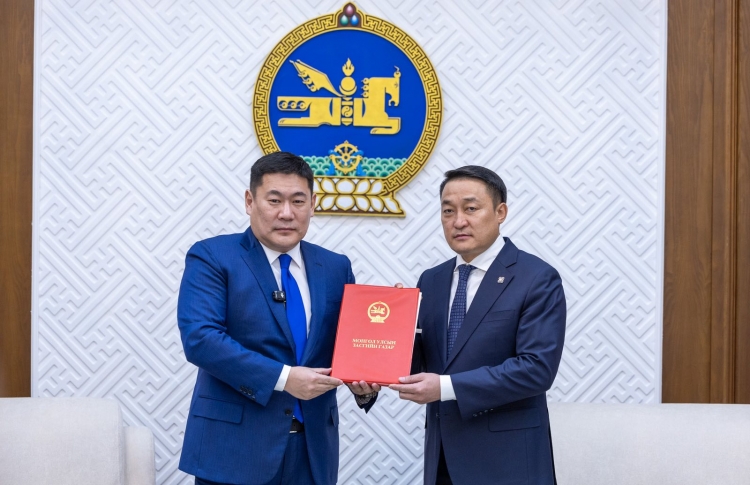
On March 17, Prime Minister L. Oyun-Erdene submitted a draft law to Speaker of Parliament, D. Amarbayasgalan, seeking ratification of an intergovernmental agreement between Mongolia and China aimed at enhancing the capacity of the Gashuunsukhait-Gantsmod port and facilitating coal sales. The agreement is part of a broader strategy to boost Mongolia’s economic development through improved infrastructure.
Signed on February 14, 2025, the agreement focuses on the construction of the Gashuunsukhait-Gantsmod cross-border railway, which has been designated as the top priority among 14 mega-projects initiated by the Mongolian government. The railway connection will serve as an important link, allowing for increased transportation of coal from the Tavantolgoi mine, one of the largest coal deposits in the country.
Upon receiving parliamentary approval, the government plans to announce a tender for the railway’s construction by the end of the month.
“I am confident that Parliament will approve the agreement early in the spring session, enabling construction to start without delay,” the Prime Minister stated.
This railway will represent the second major railway connection established between Mongolia and China, following the Zamiin-Uud-Erlian line, which was built under a 1955 agreement. The Gashuunsukhait-Gantsmod railway is expected to significantly enhance Mongolia’s port capacity, potentially doubling it and raising coal exports from the current average of 83 million tons per year to 165 million tons.
The anticipated increase in coal sales revenue – projected to hit USD 1.5 billion annually – will not only bolster Mongolia’s economy but also aid in reaching the government’s goal of achieving a GDP per capita of USD 10,000. This development promises to boost the National Sovereign Wealth Fund’s Accumulation Fund, creating a solid foundation for long-awaited tax reforms.
The implementation of Gashuunsukhait-Gantsmod project will facilitate the phased development of other railway connections at key ports, including Shiveekhuren-Sekhee, Bichigt-Zuunkhatavch, and Khangi-Mandal.

