 Mongolian
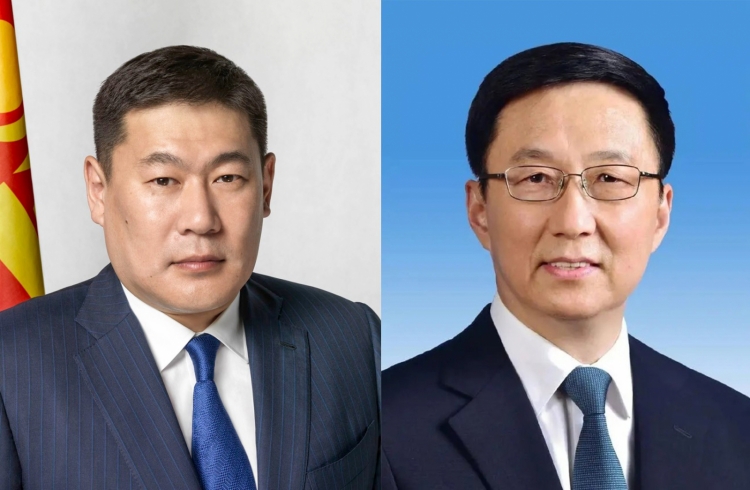
To mark the 75th anniversary of diplomatic relations between Mongolia and the People’s Republic of China, Han Zheng, Vice President of China will visit Mongolia from September 6-8, 2024, at the invitation of the Mongolian government
To mark the 75th anniversary of diplomatic relations between Mongolia and the People’s Republic of China, Han Zheng, Vice President of China will visit Mongolia from September 6-8, 2024, at the invitation of the Mongolian government
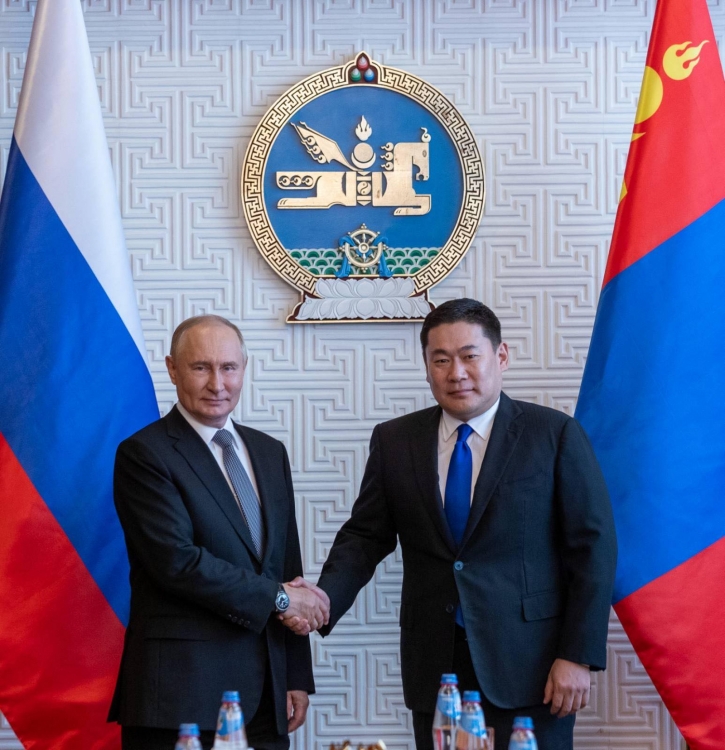
Mongolia’s Prime Minister, Oyun-Erdene Luvsannamsrai, held a courtesy meeting with Russian President Vladimir Putin, who is on an official visit to Mongolia to mark the 85th anniversary of the victory at the Battle of Khalkh River.
During their discussion, Prime Minister Oyun-Erdene Luvsannamsrai expressed his satisfaction with the active development of relations and cooperation between the two countries. He emphasized his intention to enhance the comprehensive strategic partnership through targeted projects and programs spanning political, economic, educational, cultural, and humanitarian sectors.
The Prime Minister also expressed his delight at the progress of the Eg River Hydroelectric Plant project, which was a key topic at the 7th Eastern Economic Forum.
Both leaders voiced their desire to establish a temporary free trade agreement between Mongolia and the Eurasian Economic Union (EAEU) to expand and deepen bilateral trade, economic, and investment cooperation.
They agreed that such an agreement would significantly boost Mongolia’s exports of products such as meat, leather, wool, cashmere, carpets, and cement to the EAEU, including the Siberian region of Russia. Prime Minister Oyun-Erdene Luvsannamsrai also emphasized the importance of the agreement between the two governments on cooperation in the supply of strategically important energy and oil products to Mongolia, noting this as a highlight of the Russian President’s visit.
Additionally, the two leaders exchanged views on accelerating major projects and programs, particularly the Mongolia-Russia-China Economic Corridor initiatives, which include the development of the central axis railway, the establishment of an eastern railway corridor, and the creation of an international tourism zone.


The first meeting of the Economic Policy Council under the Prime Minister of Mongolia took place on August 31. The Government Resolution No. 34, approved on August 14, confirmed the council’s working procedures and composition. This meeting was held to discuss the coalition government’s action program for 2024-2028, the amendment of the 2024 budget, and the submission of the 2025 draft budget to parliament.
In his opening remarks, Prime Minister Oyun-Erdene Luvsannamsrai highlighted the government’s focus on regional development and increased investment in the new budget submitted to parliament. He emphasized the importance of using the strengths of the coalition government to speed up the country’s development.
The Prime Minister also shared that Mongolia’s gross domestic product (GDP) has increased from 36 trillion MNT in 2021 to 75 trillion MNT. He expressed confidence that GDP per capita could reach USD 7,500 by raising the GDP to 95 trillion MNT next year, with a goal of reaching USD 10,000 in the near future.
Finance Minister Javkhlan Bold highlighted that the 2025 state budget is the first to be based on the concept of regional development. He announced that 38 major infrastructure projects would receive funding next year. The minister also stated that the government plans to support large-scale development projects that have been on hold for many years.
Additionally, he noted that next year’s budget would address the capital city’s urgent issues and aims to solve the housing shortage in partnership with the National Sovereign Wealth Fund. The budget also includes plans to start reforms in the energy sector.

Эдийн засгийн бодлогын зөвлөлийн бүрэлдэхүүнд багтсан УИХ, Засгийн газрын зарим гишүүн, Монголын эдийн засаг, санхүү, бизнесийн салбар болон төр, хувийн хэвшил, эрдэмтэн, судлаачдын төлөөлөл хуралдааны үеэр 2025 оны төсвийн төсөлд байр сууриа илэрхийлэв.


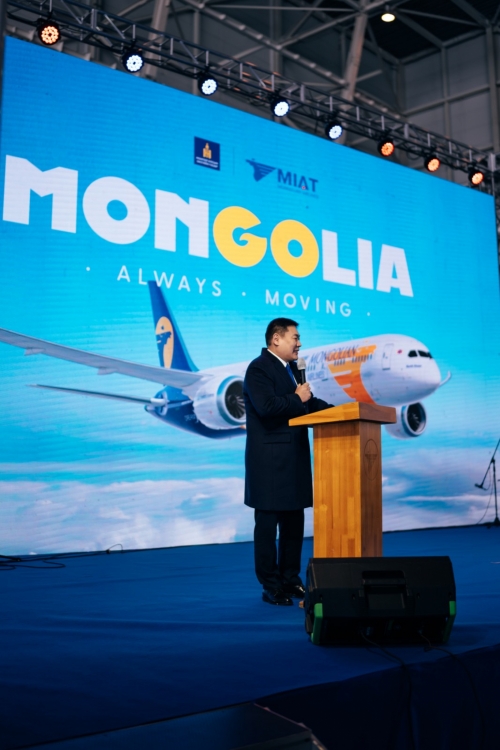
MIAT, Mongolia’s national flag carrier marked another milestone in its journey towards transport modernization with the reception of its second Boeing 787-9 Dreamliner on April 25. The Prime Minister L. Oyun-Erdene took part in the event and delivered an address at the aircraft’s welcoming ceremony.
Renowned for its cutting-edge technology and exceptional fuel efficiency, the Boeing 787-9 Dreamliner represents a significant asset for MIAT. Its advanced engines and lightweight design not only ensure remarkable fuel savings but also promise a serene travel experience for passengers, characterized by minimal cabin noise and top-tier amenities

The aircraft’s cargo capacity, amounting to 20 tons, underscores its pivotal role in enhancing cargo transportation links between Asia and Europe. With the potential to facilitate the carriage of up to 10,000 tons of cargo annually from Mongolia, it stands as a testament to MIAT’s commitment to bolstering trade and connectivity on regional and international scales.
Primed for long-haul journeys, the Boeing 787-9 Dreamliner opens up new horizons for Mongolia’s air travel ambitions. Plans are underway to leverage its capabilities for establishing direct routes to key destinations such as the USA, Singapore, and Australia, further enhancing Mongolia’s global connectivity and tourism prospects.
In his address during the ceremony, Prime Minister L. Oyun-Erdene highlighted the transformative impact of recent policy reforms on Mongolia’s aviation landscape. He remarked, “Mongolia achieved a significant milestone last year by welcoming 600,000 tourists and generating $1.2 billion in tourism revenue, establishing itself as a premier travel destination. As we embark on the journey of rapid tourism development in 2024, MIAT’s expanded fleet underscores our commitment to providing world-class air travel experiences.”
He further elaborated on the benefits of air transport liberalization, stating, “The liberalization of air transport has paved the way for direct flights from Mongolia to 155 cities across 42 countries in 2023, with projections indicating an expansion to 379 destinations in 52 countries by 2024. This policy shift has catalyzed a 3.5-fold increase in international flights and passenger traffic within the civil aviation sector, accompanied by a notable reduction in both international and domestic flight tariffs, benefitting travelers and stakeholders alike.”


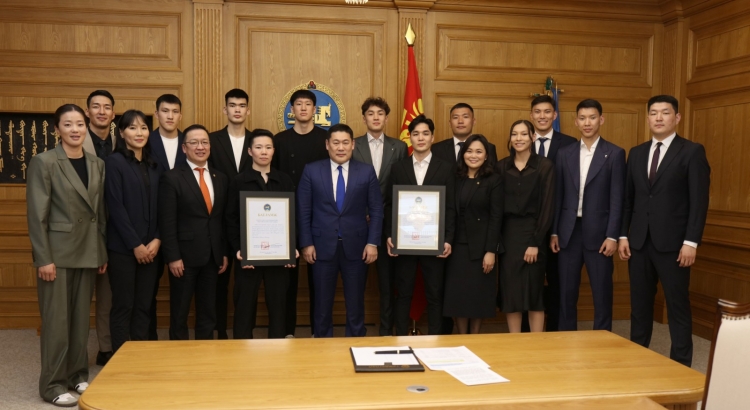
The Mongolian National 3×3 Basketball Men’s and Women’s Teams were recognized as Ambassadors of “Go Mongolia,” the national branding initiative aimed at promoting Mongolia internationally and boosting the tourism industry.
On April 17, 2024, Prime Minister Oyun-Erdene L. presented certificates to the athletes of the national teams and congratulated them on their consistent success in the Asian Games and Asian Championships. The Prime Minister expressed his gratitude to the athletes for their significant contribution to showcasing Mongolia to the world and for inspiring strength and hope among children and youth.
In recognition of their achievements, the Cabinet decided to award cash prizes, named after the Prime Minister of Mongolia, to the members of the 3×3 National Basketball Teams.
Previously, the title of “Go Mongolia” Ambassador was bestowed upon Sh. Enkhiin-Od, a basketball league player at the University of Dayton in the USA, the Hunnu rock band “The Hu,” and Honored Artist of Mongolia and opera singer G. Ariunbaatar.


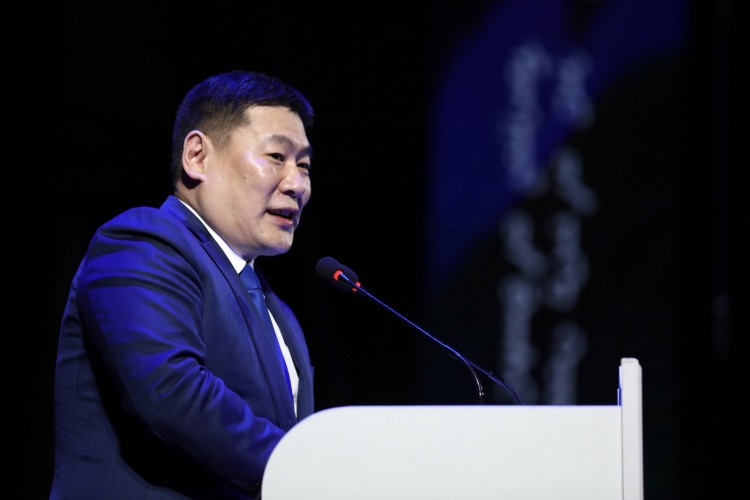
On April 12, the Prime Minister of Mongolia, L. Oyun-Erdene, delivered a speech at the 8th Congress of Teachers, highlighting the government’s New Recovery Reform. He began by outlining the policies and measures undertaken by the government, as well as the current social and economic landscape in Mongolia. The Prime Minister emphasized the government’s efforts in addressing coal theft, trading coal on the stock exchange, combating corruption, and advancing digitization, all of which have yielded positive economic outcomes.
He noted that Mongolia’s GDP increased from 53.9 trillion MNT in 2022 to 68.9 trillion MNT in 2023, with export income rising from 12.5 billion USD to 15.2 billion USD in the same period. Additionally, foreign exchange reserves reached a historic high of 5 billion USD, and the government successfully paid off 13.3 trillion MNT in foreign loans.

Furthermore, Prime Minister L. Oyun-Erdene underscored the government’s commitment to enhancing the teacher training system as a pivotal aspect of education sector reforms. Starting this academic year, the government will fully cover tuition fees for students meeting specific criteria pursuing a bachelor’s degree in education to become teachers. Additionally, teachers meeting prescribed work and skill requirements and pursuing a master’s degree locally will have their tuition fees fully subsidized by the government. Children of teachers with over 15 years of experience studying in high-demand fields will also receive full tuition fee coverage from the government.

At the congress, Prime Minister L. Oyun-Erdene awarded scholarships to both teachers and students, recognizing their significant contributions to the education sector. He also highlighted the government’s achievements in expanding educational infrastructure nationwide since 2020, including the establishment of 197 new schools and 285 kindergartens, resulting in a 93 percent kindergarten enrollment rate.


The National Committee for the Preparation of the National Team for the “Paris-2024” Olympic and Paralympic Games convened on April 10, 2024, where it was announced that Mongolian athletes have successfully secured 10 Olympic and 4 Paralympic qualifications. Mongolia has set ambitious targets for the upcoming Olympics, aiming to achieve 45 qualifications in 12 sports and clinch 4-5 medals. Additionally, the country is eyeing 12 qualifications in seven categories and 2-3 medals at the Paralympics.
To support the athletes in reaching these goals, a dedicated team has been assembled, comprising specialized units in sports medicine, training, psychology, and nutrition. This team provides scientific-based professional support to both athletes and coaches of the National Team.
In an effort to showcase Mongolia’s rich culture and heritage on a global stage, the “Mongolian House” Project will be launched during the Olympics. This initiative will spotlight the “GO MONGOLIA” brand, highlighting the country’s nomadic culture, traditional art, cuisine, and warm hospitality to an international audience. The “Mongolian House” will be open from July 27 to August 11, 2024, from 10:00 am to 11:00 pm, occupying a 922-square-meter area at the “La Villette” Park in Paris.

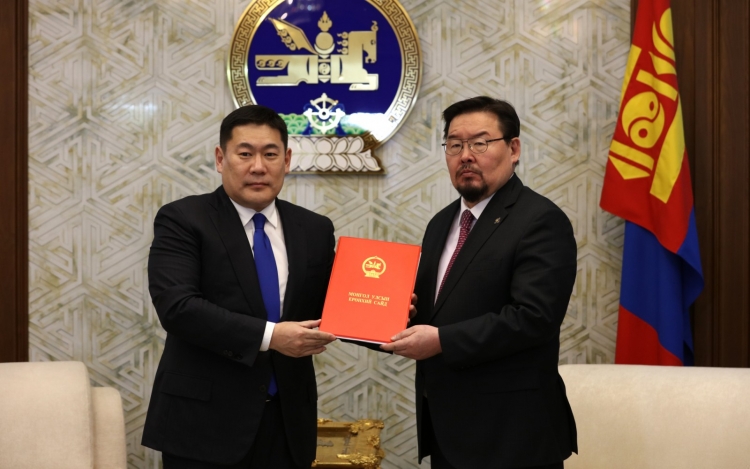
Mongolia’s Prime Minister, L. Oyun-Erdene, submitted the Sovereign Wealth Fund bill to Parliament Speaker G. Zandanshatar on April 3.
Prime Minister L. Oyun-Erdene underscored that “the bill on the Sovereign Wealth Fund has been crafted in consultation with the political parties represented in Parliament.”
The main goal of this legislation is to guarantee that all Mongolian citizens, including both current and future generations, receive the benefits from the revenues generated by the country’s subsoil resources, ultimately strengthening the state budget.
Additionally, the bill seeks to outline the processes for identifying the origins, categories, and objectives of the wealth fund, setting up the organizational framework for overseeing the fund’s assets, and implementing systems for reporting and supervising its operations.

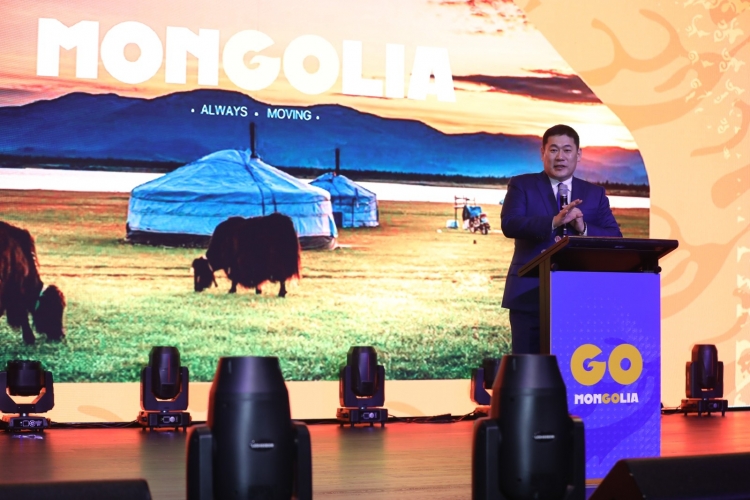
Prime Minister of Mongolia, L. Oyun-Erdene, participated in the launch of the “Go Mongolia” national tourism brand event on March 28, 2024, in Seoul, as part of his working visit to South Korea.
During his official visit to the Republic of Korea in February 2023, Prime Minister L. Oyun-Erdene launched the “Years to Visit Mongolia” with the “Welcome to Mongolia” event.
At the opening of the Go Mongolia event, the Prime Minister expressed gratitude to tourists, investors, hospitality workers, airlines, media, film industry professionals, celebrities, influencers, and content creators for their significant contributions to the development of tourism in Mongolia.
Highlighting Mongolia’s economic progress, the Prime Minister stated, “In 2023, Mongolia’s economy witnessed an eight percent growth, ranking 22nd globally in terms of economic expansion. This growth, doubling our gross domestic product, owes much to the burgeoning tourism sector alongside mining.”

Addressing the substantial influx of South Korean tourists, the Prime Minister remarked, “Last year, one in every three tourists visiting Mongolia came from South Korea. The Mongolian government has granted visa-free entry for Korean citizens, a policy that will persist.”
Furthermore, the Prime Minister underscored the impact of the visits of Korean entertainment personalitiesto Mongolia, stating, “Famous Korean singers and actors, adored by Mongolian youth, have journeyed to our country, creating valuable content that showcases Mongolia’s beauty. Currently, one in every three Korean media channels airs programs about Mongolia.”
During the event, it was highlighted that Mongolia expanded its flight connections from 26 destinations in 10 countries to 155 destinations in 42 countries in 2023. This year, flights will be extended to 379 destinations in 52 countries, with plans to gradually increase flights between Mongolia and Korea while reinstating domestic flights within Mongolia.
 Highlighting Mongolia’s dedication to tourist safety, the Prime Minister emphasized the streamlined and digitized tourism services. Mongolia’s progress in e-governance, as demonstrated by an 18-place increase in the e-governance index, was acknowledged internationally. Furthermore, the Prime Minister stressed the extensive availability of “Starlink” high-speed Internet service across Mongolia.
Prime Minister L. Oyun-Erdene unveiled the joint initiative between Mongolia and Korea to establish the “Blue Spotted” tourism route, inviting participation from the United States, India, the European Union, and many Central Asian countries.
During his visit, Prime Minister L. Oyun-Erdene will meet with South Korean Prime Minister Han Duck-soo and engage with representatives from South Korea’s tourism sector.


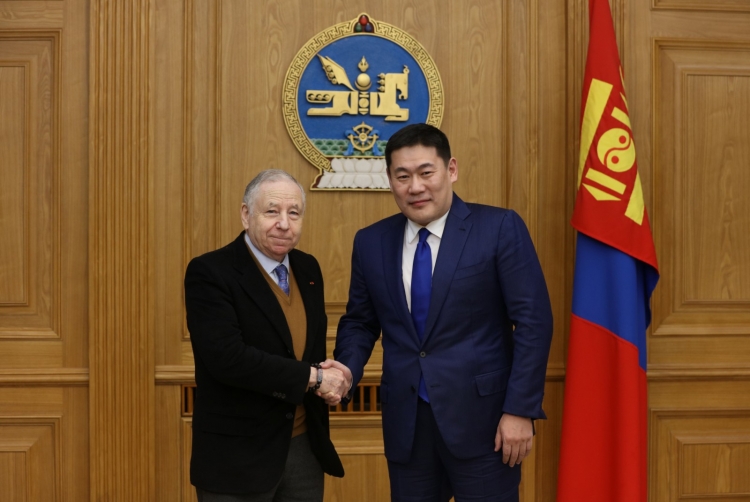
On March 27, Prime Minister of Mongolia L. Oyun-Erdene had a significant meeting with Jean Todt, the UN Special Envoy for Road Safety.
Their encounter traces back to January during the 54th World Economic Forum held in Davos, Switzerland. It was there that Prime Minister L. Oyun-Erdene met Jean Todt, accompanied by his wife, the Oscar-winning actress and UN Goodwill Ambassador Michelle Yeoh. During this encounter, Prime Minister L. Oyun-Erdene extended an invitation for them to visit Mongolia.
At the beginning of their recent meeting, Prime Minister L. Oyun-Erdene expressed gratitude to Mr. Jean Todt for launching the “UN global campaign for road safety in Mongolia,” stressing its significance in providing traffic education and enhancing public awareness of road safety. He highlighted the Government of Mongolia’s ongoing efforts to reform the legal framework pertaining to road safety and proposed collaboration in attracting investments, offering policy support, and facilitating expert training in this realm.
In response, Special Envoy Jean Todt shared his purpose in visiting Mongolia: to inaugurate the UN campaign for road safety in the country. He disclosed plans to deploy billboards advocating traffic safety regulations, involving the participation of global celebrities, across approximately 1000 cities spanning over 80 countries. The overarching goal of this campaign is to reduce traffic accident fatalities by half by 2030.
Furthermore, Special Envoy Jean Todt conveyed his wife’s intent to visit Mongolia. He affirmed his commitment to promoting Mongolia internationally and supporting tourism initiatives under the “Welcome to Mongolia” and “GoMongolia” banners, aligning with the agreements made during his prior meeting with Prime Minister L. Oyun-Erdene in Davos, Switzerland.